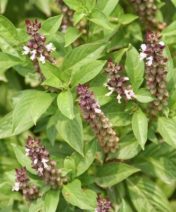
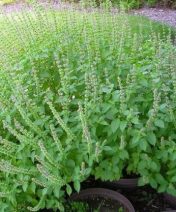
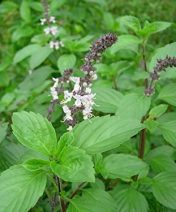
Tulasi are found in India which are Krishna Tulsi, Rama Tulsi, and Vana Tulsi. This herbal plant is used to treat various health problems for more than 5000 years. This plant falls under the mint family. Due to the nutrients of this plant, it has plenty of health benefits.
If you want to return the product, you can return us within 7days from the date of delivery as Shipping & Return policy.
Once your returned item is received by Truelyf Essentials, your refund or new item will be processed. If you want to receive cash from Truelyf to your personnel account, You can make it very simple, please call our customer relationship Team @ +91 9789288606, they will guide you to get it as soon as possible.
We will ensure that the entire amount is refunded to your account within 10 – 12 working days
Give us a shout if you have any other questions and/or concerns.
♦Thulasi is the most sacred of all the herbs in India.
♦ This herbal plant is found in almost every home in India.
♦ It is used to protect the mind, body, and spirit.
♦ It is the most popular herbal plant in South Asian Countries, and now it is gaining popularity in Western Countries.
♦ In India, it is most commonly known as Tulsi or Tulasi.
♦ This basil plant is the leafy herb that belongs to the family mint.
♦ Besides praying to the plant, a number of people advise including the leaves and roots of the plant in various medical decoctions.
Health Benefits of Thulasi ilai / Sacred Basil Dried Leaves (Raw)
♦ This thulasi has anti-bacterial, anti-viral, antibiotic, and anti-carcinogenic properties.
♦ It is also used to treat respiratory ailments such as asthma Cetera, chronic bronchitis.
♦ This herbal plant helps to get good to relieve headache, fever, cold, sore throat, cough, flu, and chest congestion.
♦ This also helps to relieve stress, and also helps to strengthen the immunity power.
♦ It is loaded with phytonutrients, essential oils, Vitamin A and C
♦ It can ward off the harmful effects of free radicals.
♦ Regular tulsi consumption can also aid in balancing various bodily processes.
♦ It is also beneficial in treating conditions like hepatitis, malaria, tuberculosis, dengue and swine flu.
♦ It counters elevated blood sugar levels and is therefore beneficial for diabetics.
♦ It is good for dental health and also healthy gums.
♦ It is also used to treat skin problems, itches, and ringworms.
♦ It is an effective insect repellent and also it is used to treat insect bite.
Side Effects :
♦ There are no side effects in using this product. Take medical advice for its use during pregnancy.
Harvesting & Manufacturing Methodology :
♦ All our herbs are Organically Harvested , dried, and pulverized with no chemical interactions that will assure the ensuring 100% natural herbal powders and related products.
Weight
0.100 kg
Reviews
There are no reviews yet.
Be the first to review “Thulasi ilai / Sacred Basil Dried Leaves (Raw) / துளசி” Cancel reply
Banyan Fruit / Aalam Palam / Aalam Pazham Powder helps persons who lost energy by excess masturbation or over indulgence in sexual activities, alchohol, drugs, tobacco etc to regain their lost energy
Banyan Fruit / Aalam Palam / Aalam Pazham Powder helps persons who lost energy by excess masturbation or over indulgence in sexual activities, alchohol, drugs, tobacco etc to regain their lost energy
Banyan tree is a huge tree with very extensive branches. It is a evergreen tree. It branches The leaves are 10 -20 cm long and has many aerial roots. The leaves are broad, oval and glossy. Leaves oozes out a White milky fluid
Banyan tree is a huge tree with very extensive branches. It is a evergreen tree. It branches The leaves are 10 -20 cm long and has many aerial roots. The leaves are broad, oval and glossy. Leaves oozes out a White milky fluid
Banyan is a tree with tremendous medicinal qualities, in Ayurvedic medicine system, used for treatment of innumerable diseases. These Kind of remedies are simple & safe and can be done at home without any problem
Banyan is a tree with tremendous medicinal qualities, in Ayurvedic medicine system, used for treatment of innumerable diseases. These Kind of remedies are simple & safe and can be done at home without any problem
Aadu Theenda Paalai | Aristolochia Bracteolata is an amazing plant that belongs to the genus aristolochia which has more than 400 species. Most of these species have medicinal uses and are commonly called birthworts. They are used especially in Chinese and Ayurvedic medicine.
Aadu Theenda Paalai | Aristolochia Bracteolata is an amazing plant that belongs to the genus aristolochia which has more than 400 species. Most of these species have medicinal uses and are commonly called birthworts. They are used especially in Chinese and Ayurvedic medicine.




Reviews
There are no reviews yet.